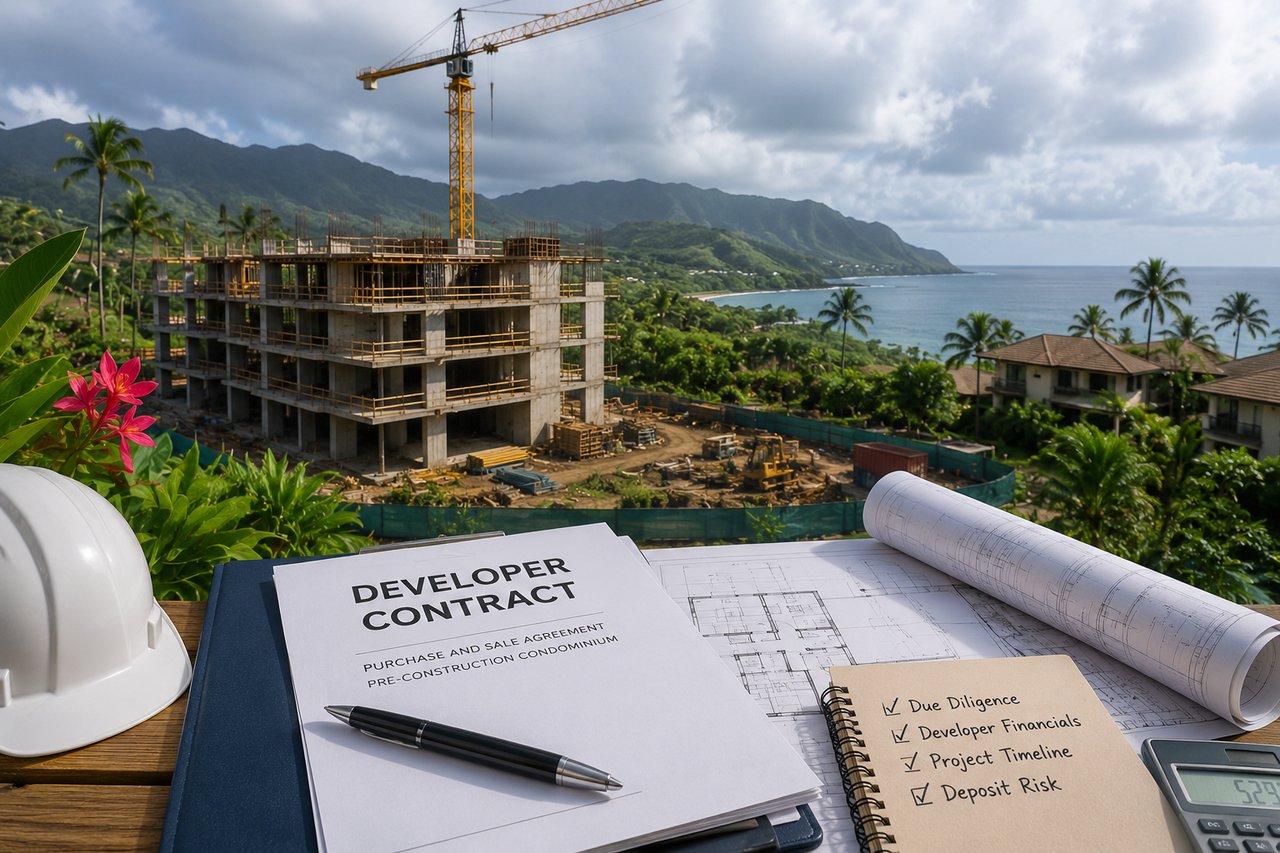
Before You Sign a Developer Contract, Read This.
Buyer Warnings Reba Roy May 22, 2026
Buyer Warnings Reba Roy May 22, 2026
People who did everything right — hired agents, reviewed disclosures, wired their deposits into escrow — are now standing in a bankruptcy creditor line with six figures at risk and no completed building to show for it. This is what developer pre-sale risk looks like when it stops being hypothetical.
I have worked the South Shore for a long time. I have seen projects stall, change hands, and collapse. When the Kauanoe o Koloa contracts were being marketed, I reviewed one carefully with clients who were seriously interested. What I saw in that contract led me to advise them not to buy. They listened. They are not in the creditor line today.
This post explains what happened, why it is not a surprise to anyone who reads developer contracts carefully, and what every buyer considering a pre-construction purchase in Hawaii needs to ask before signing anything.
Meridian Pacific was developing Kauanoe o Koloa — a 279-unit luxury condominium project on 25 acres next to the Kiahuna Golf Course, one mile from Poipu Beach. It has been a visible construction site for years. As of May 14, 2026, it is a federal bankruptcy case, filed in Atlanta — more than 4,500 miles from Kauai.
The developer's attorney cited a "predatory lending agreement" as the reason for filing. Whatever that claim produces in court, the immediate reality for buyers is the same: approximately 72 Phase 1 buyers placed hard deposits totaling more than $97 million. Those buyers are now unsecured creditors in a federal proceeding.
The developer reports assets of $50–$100 million against liabilities of $1–$10 million. But bankruptcy means distribution is decided by a court — and unsecured creditors, including buyers with deposits in escrow, are not first in line. Secured lenders and priority claims come before them. A creditor hearing is scheduled June 18, 2026. The path and timeline for any buyer recovery is unknown.
If you have a deposit in escrow on this project: You are a creditor in an active federal bankruptcy case. Do not wait. Contact an independent Hawaii real estate attorney — not your purchasing agent, not the developer's sales office — and get counsel on your specific contract and deposit terms as soon as possible.
Kauai's development history includes projects that were marketed with polished renderings, pre-sold with large deposits, and never completed — or completed years late under different ownership than the buyer originally contracted with. Meridian Pacific is the most recent and most visible example. It is not the first, and it will not be the last.
The risk compounds over time. Pre-construction timelines that look reasonable on a sales brochure can stretch by years. Every year a project is delayed, more things can change: interest rates, the developer's lending terms, construction costs, the regulatory environment, and the developer's financial position. A project that was viable in year one may not be viable in year four. And the buyer's deposit — sometimes a hundred thousand dollars, sometimes several hundred thousand — sits in that uncertainty the entire time.
Deposits often fund construction. This is the detail most buyers never examine carefully enough. Depending on the contract, the money placed in escrow may not be sitting in a protected account waiting to be returned. It may already be working as part of the developer's financing. If the project stalls or enters bankruptcy, recovering that capital depends entirely on whatever protections your specific contract contains — or does not contain.
Hawaii adds its own complications. Permitting is slow and unpredictable. Approvals that appear final can be challenged in court. Environmental litigation on Kauai is active and well-organized — the Kauanoe o Koloa project was one week away from a Hawaii Supreme Court hearing over drainage approvals when the bankruptcy filing triggered an automatic stay and halted everything. That lawsuit, and the uncertainty it carries, is now part of the same bankruptcy proceeding buyers are caught in.
The bottom line: a lot can change between the day you sign a pre-construction contract and the day a building is supposed to be ready. In Hawaii, that window is often longer — and more complicated — than buyers expect.
I had clients who were seriously interested in Kauanoe o Koloa. The project was appealing — prime Poipu location, luxury finishes, vacation rental potential in a Visitor Destination Area. I understood the appeal completely.
When we reviewed the purchase contract in detail, I had serious concerns. The deposit structure required substantial sums — six figures in some cases — paid into escrow well in advance of any completed construction, with terms that gave buyers limited recourse if the developer failed to perform. Timeline provisions were vague. Contingencies were weak. Active environmental concerns were being raised. I shared all of that with my clients and they chose not to proceed.
I want to be careful here, because I know the fuller picture. Some of the buyers now in that creditor line had agents who raised exactly the same concerns. They were advised. They understood the risks. But developer sales teams are skilled, and they should be — it is their job to believe in the project and make you believe in it too. Objections get addressed. Enthusiasm is contagious. And sometimes buyers weigh everything they have heard and decide the upside is worth the risk. That is a human decision, not a failure of advice.
I am not sharing this to draw any comparison. I am sharing it because the contract issues I saw were real, the risks were real, and the same risks exist in pre-construction deals across Hawaii and the United States. Knowing what to look for before you sign is the only protection that matters.
Pre-construction purchases are not automatically bad. There are well-capitalized developers with solid track records and contracts that genuinely protect buyers. But every pre-construction contract deserves careful scrutiny — regardless of how beautiful the renderings are or how desirable the location. Go through these questions with your agent and an independent real estate attorney before any deposit leaves your account.
If any of these questions cannot be answered clearly from the contract, that is not a minor detail to circle back on. That is the risk profile of your investment.
The South Shore of Kauai is a remarkable place to own property. There is real, lasting value here — in resales, in established communities, in land and homes with clear title and no construction risk. If you are considering any purchase on Kauai, I welcome the conversation. Bring your questions. I will bring honesty about both the opportunity and the risk.

Hot Topics
Lala has moved west of the state and the last rain bands cleared Kauai early Monday
Kauai Real Estate
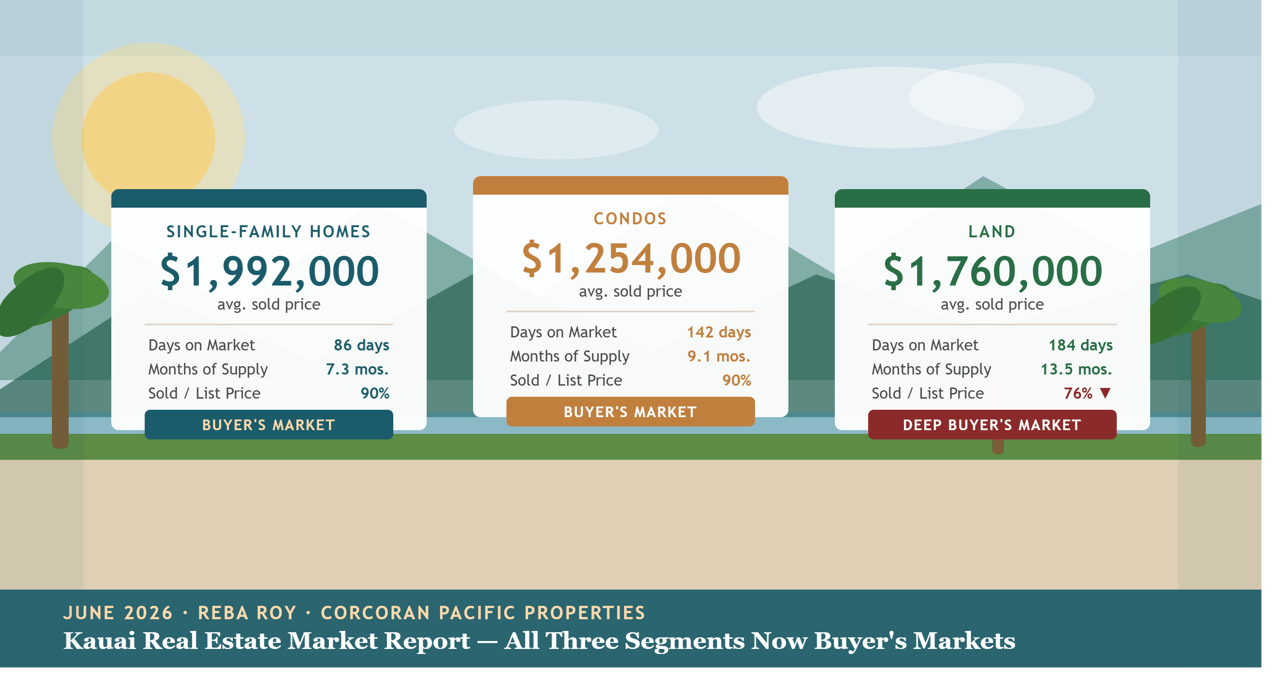
Kauai Real Estate Statistics
Data Through June 2026
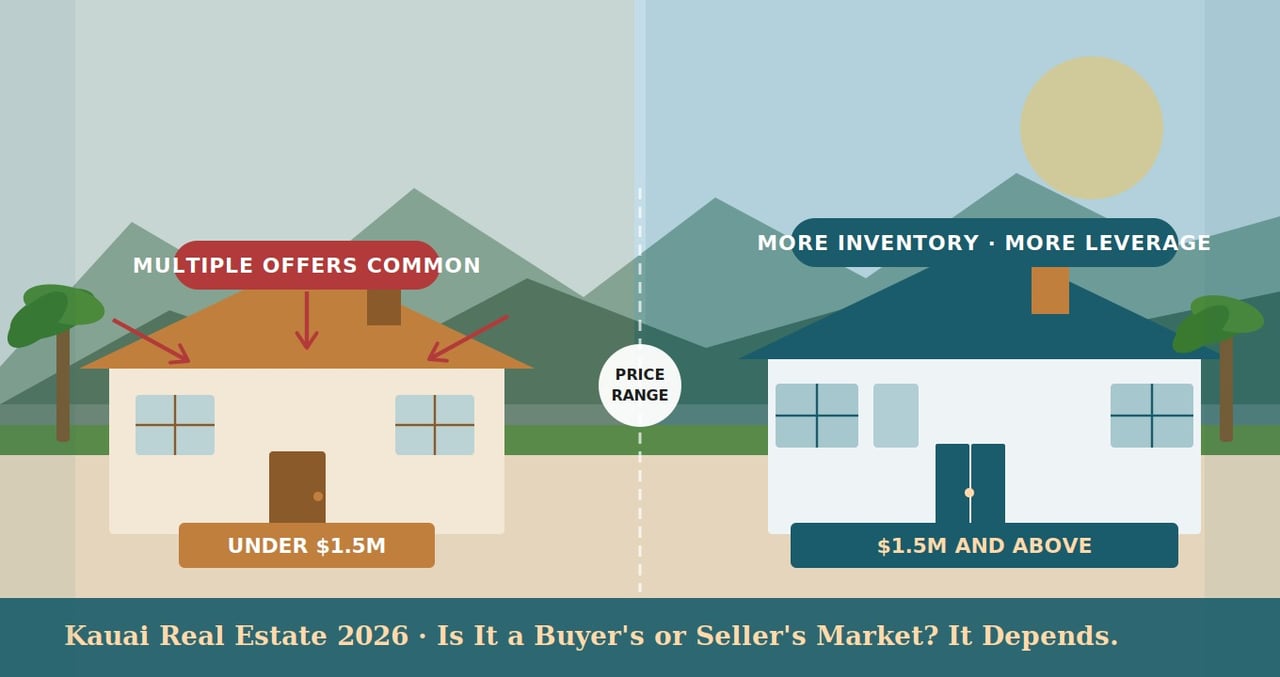
Kauai Real Estate
The Answer Depends on the Location
Kauai Real Estate
And What Kauai Property Owners Need to Know
Kauai Real Estate Statistics
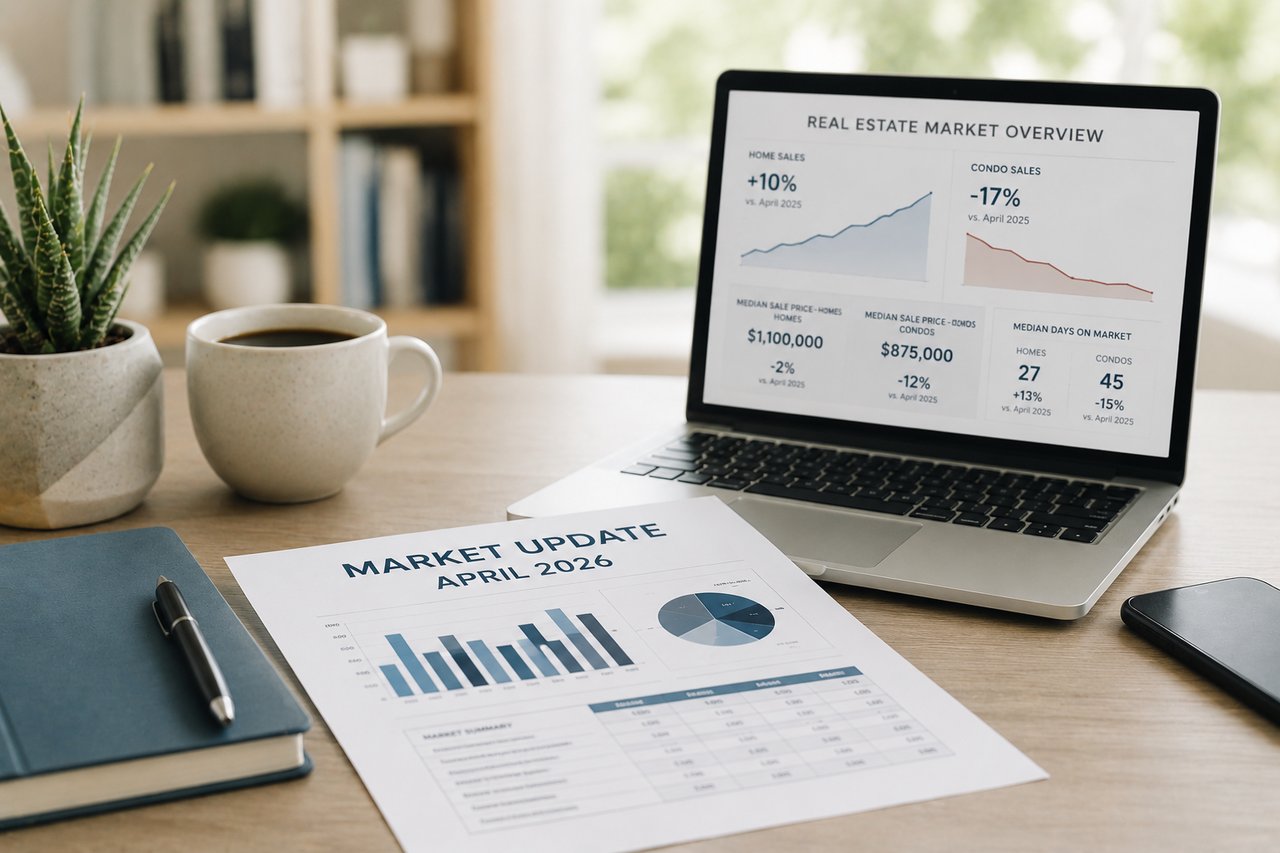
Home sales increase while median prices soften as buyers remain active but selective across Kauai
Buyer Warnings
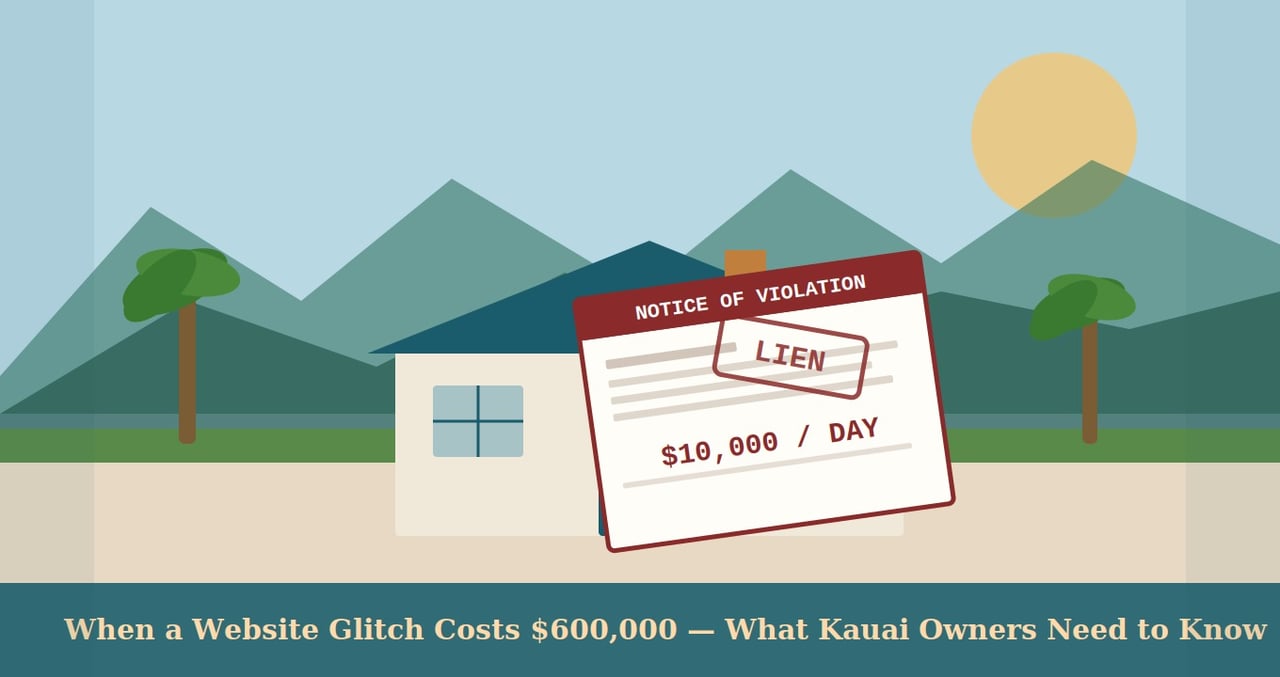
The Meridian Pacific Developer bankruptcy is not just a headline
Hot Topics
What homeowners and sellers should understand about SB3028 and how it may influence pricing, demand, and market activity

For Sellers
A closer look at conveyance tax, property taxes, and what sellers should factor into their bottom line